

They are fantastic images of the universe that the members of the European Southern Observatory "ESO Ambassadors" network of photographers make available to the general public on an almost daily basis. To do this, ESO works with photographers from all over the world. Most of the images are taken in Chile, around the Paranal and La Silla observatories, and around the ALMA telescope. One of the ESO photographers is Petr Horálek. In this interview he talks about his passion - astrophotography.
How did you get into astrophotography?
While studying astrophysics at Masaryk University in Brno, I started my first job as a fireball observer at the Astronomical Institute of the Czech Republic in Ondrejov. I used cameras with film. The observatory was part of an international network that observed meteors. They calculated whether a cosmic rock fell to the ground or burned up in the atmosphere. This was very important and exciting, but could be boring at times. The only thing I had to do was change the film every three or four hours and check the weather for unwanted changes. So I had a lot of time on my hands. But I earned some money so I could buy my first camera. With that, I tried to make a documentary film about the sky. I had no intention of becoming a photographer. But somehow I realized that you could use the time-lapse data to take beautiful pictures. So I learned how to edit the images, especially with the help of Prof. Miloslav Druckmüller. That was in 2011, and today I'm still at it.
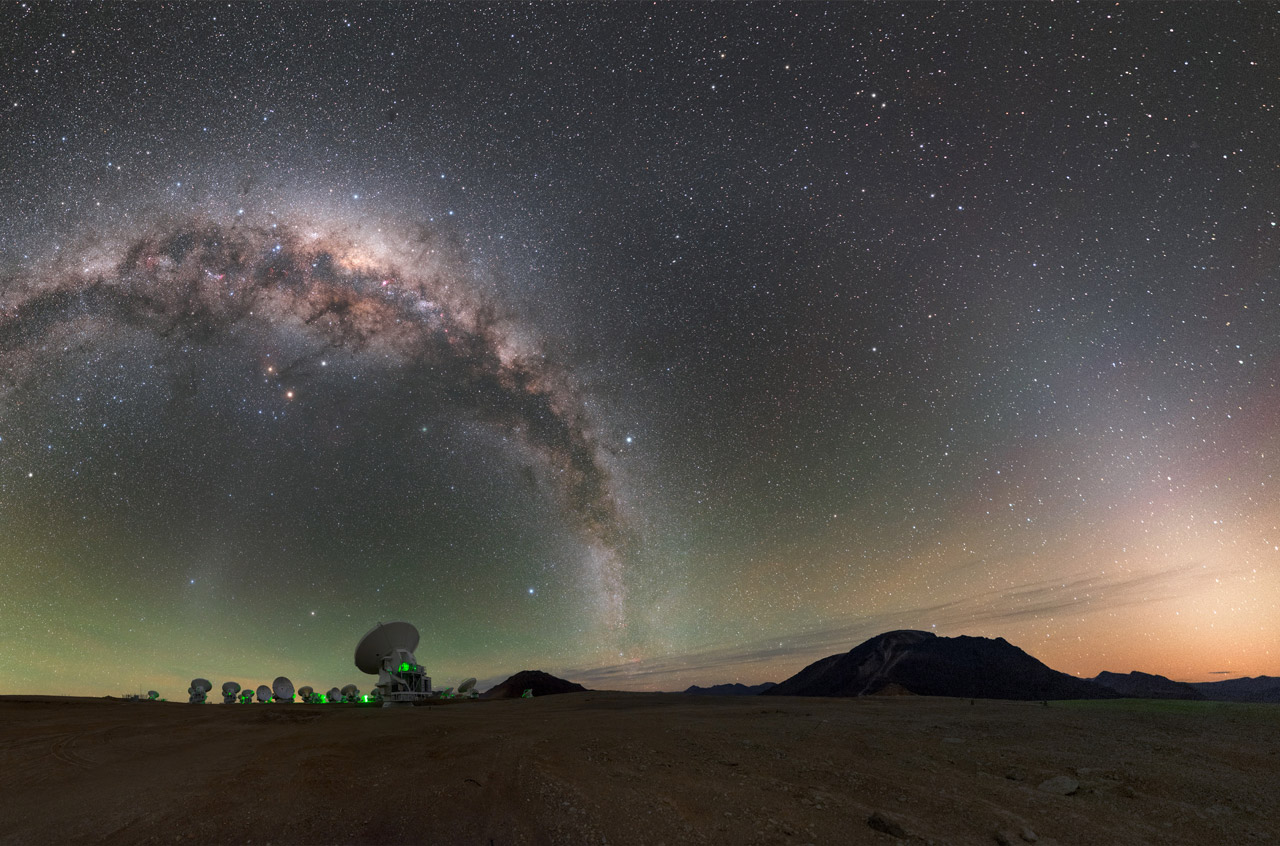
"There is no particular best spot in the world. But there are the best moments associated with it." - Petr Horálek
What appeals to you most about astrophotography?
bove all, presenting the wonders of the sky. Many people don't even know that they can participate in this. Of course, the first thing that comes to mind is the total solar eclipse. It is probably the most beautiful phenomenon - not only among astronomical phenomena, but among all natural phenomena. A friend of mine, Václav Knoll, who unfortunately passed away, used to say that the total solar eclipse is the only phenomenon in the sky that always receives applause. Especially the people who have never seen it are just amazed at what is happening. They stare at the sky with their mouths open, without breath, without sound. They do not believe that this spectacle was created by nature without human influence. The nine total solar eclipses were the most breathtaking phenomena I have ever seen.
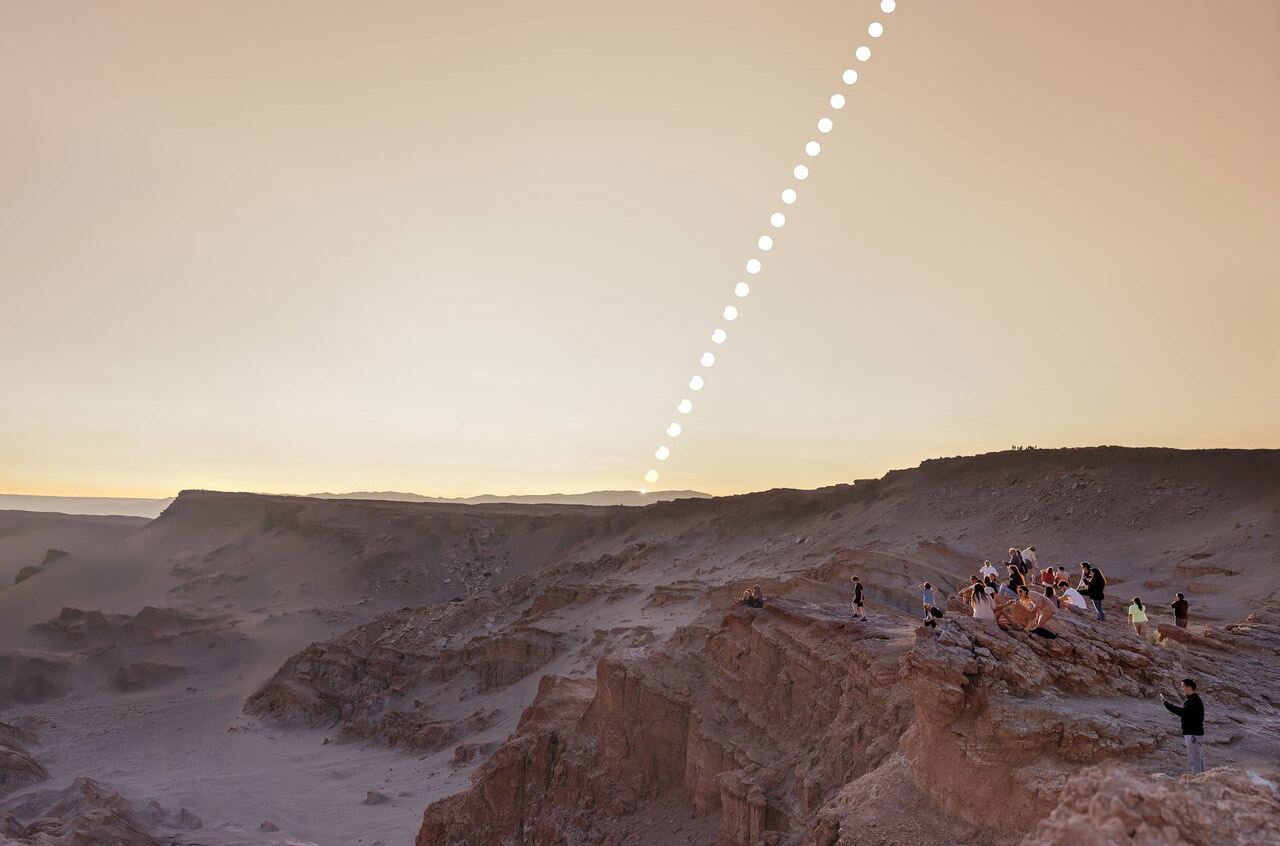
"I experienced many wonderful moments under the southern sky." - Petr Horálek
What do you remember most about them?
I experienced many wonderful moments under the southern sky. Especially with the center of the Milky Way above my head, which is not visible in Europe because it does not rise far above the horizon. I remember the first time I saw the center of the Milky Way in the Cook Islands in 2010 and felt a deep connection. I was lying on the beach waiting for the dark sky. I couldn't believe that I could see the Milky Way as I knew it from the pictures. But you can see all the structures and all the wonderful parts of the galaxy with your own eyes. I'm glad I became a photo ambassador for ESO and was able to see and photograph it again in Chile. All these photos remind me of my first wondrous moment when I saw the Milky Way in the southern hemisphere.
And then there was also the special feeling that gripped me when I visited the Hoba West meteorite. In 2015 I visited this largest iron meteorite, ever found with other astrophotographers. We all suddenly felt how small we are and how lucky humanity is to be on this planet. We are protected from so many deadly dangers of the universe by the Earth's atmosphere, our natural shield. I respectfully adjusted to the meteorite and took a picture of myself under the Milky Way. I humbly looked up at the sky while the camera worked, thinking about how the rock I was standing on, somewhere up there in the solar system, travelled before it fell to Earth. Fortunately, it didn't destroy much, so my existence and that moment were possible.
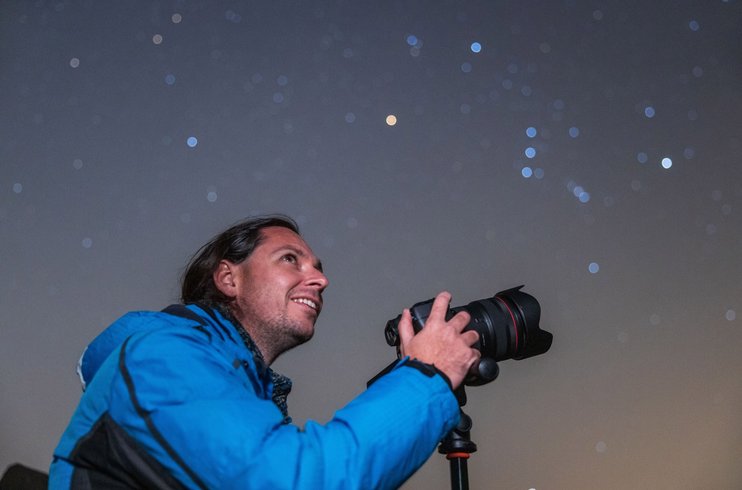
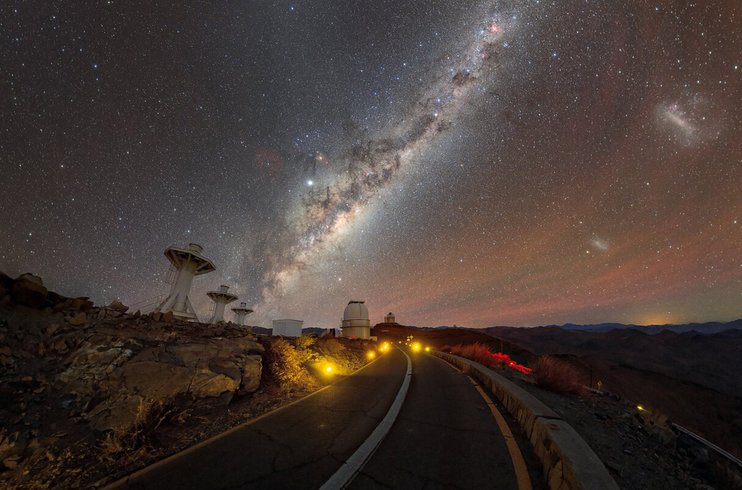
"Astrophotography is about understanding our existence on a very large scale and sharing that understanding with lay people." - Petr Horálek
What was your best photo spot in astrophotography?
There is no particular best spot in the world. But there are the best moments associated with it. And I'm lucky to have had several of them. Of course, the moments in the Cook Islands I mentioned earlier make this place one of the best in my life. Not because the place is somehow different from others, but because I felt freedom and the universe was literally at my fingertips. Imagine standing on a beach. In front of you is nothing but the ocean and the horizon is suddenly bordered by a line where the "carpet of stars" begins. There you can best understand the fragility and uniqueness of life in the universe. And that makes you want to take a photo so you can share that message, feeling or legacy.
"An observant enthusiast can become a good astrophotographer within a few months." - Petr Horálek
What tips would you give to aspiring landscape astrophotographers?
First of all, don't think of astrophotography as a job that makes money, or an activity that is mainly about technology, equipment, or IT skills. Astrophotography is about understanding our existence on a very large scale and sharing that understanding with lay people. Such is the case with landscape astrophotographs by ESO photographers. We are not just showing the beauty of the sky or the universe. Above all, we educate, and the photographs are our teaching tools. Beginners should first focus on learning what is happening in the sky and what circumstances make it possible to see or capture that.
There are so many things you can capture in the sky with your camera. Of course, you have to wait for special conditions, sometimes for a lifetime. Some phenomena are very brief, like the red sprites, and others are rare, like supernovae. Even if you photographed every part of the night sky an infinite number of times, you would still have an infinite number of opportunities to capture a unique combination of phenomena.
In addition, there are many serious environmental problems that can be captured in the sky, especially light pollution or problematic satellite constellations. All this can then become relevant as a subject for astrophotography. After the self-study of astronomy with environment, finally comes phase two: how to photograph at night? Fortunately, the technique itself is not difficult to learn, as there are many tutorials on the Internet. An observant enthusiast can become a good astrophotographer within a few months.