

In the middle of Antarctica, researchers at the German Aerospace Center are cultivating tomatoes, peppers and all kinds of other vegetables. They are testing innovative cultivation methods to make food supplies for long-term space missions less dependent on provisions.
From the eternal ice to the eternal expanse
In the middle of Antarctica, it's greening. What sounds like "fake news" is reality and has a forward-looking significance. Because near the Alfred Wegener Institute's (AWI) Neumayer III Antarctic Station, the EDEN ISS greenhouse has been standing since 2018. In the polar night, tomatoes, peppers, lettuces and herbs, among others, thrive there with the help of artificial light, effective nutrient solutions, but completely without soil. The focus is on growing plants that have a high water content and cannot be stored for long.
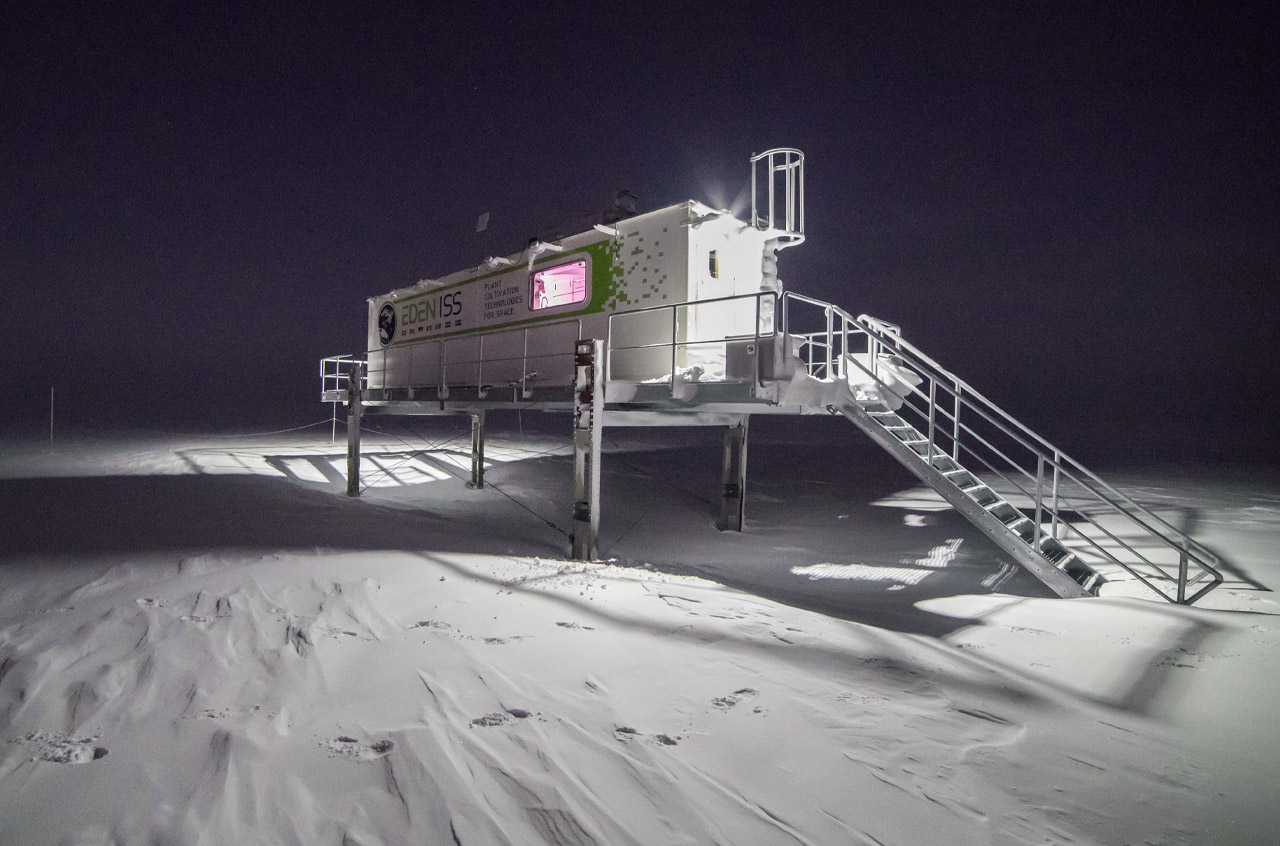
Der Garten Eden in der Kälte: Das Gewächshaus EDEN ISS im antarktischen Einsatz. Foto: DLR/NASA/Bunchek
For the operation, plant scientist Jess Bunchek from the Kennedy Space Center of the U.S. space agency NASA was a guest researcher in the ice last year. In the joint mission of DLR and NASA, she explored how astronauts can grow lettuce, cucumbers, tomatoes, peppers and herbs using as little time and energy as possible and put greenhouse technology to the test. She also recorded how the green habitat and its fruits affect the isolated hibernation crew in perpetual ice.
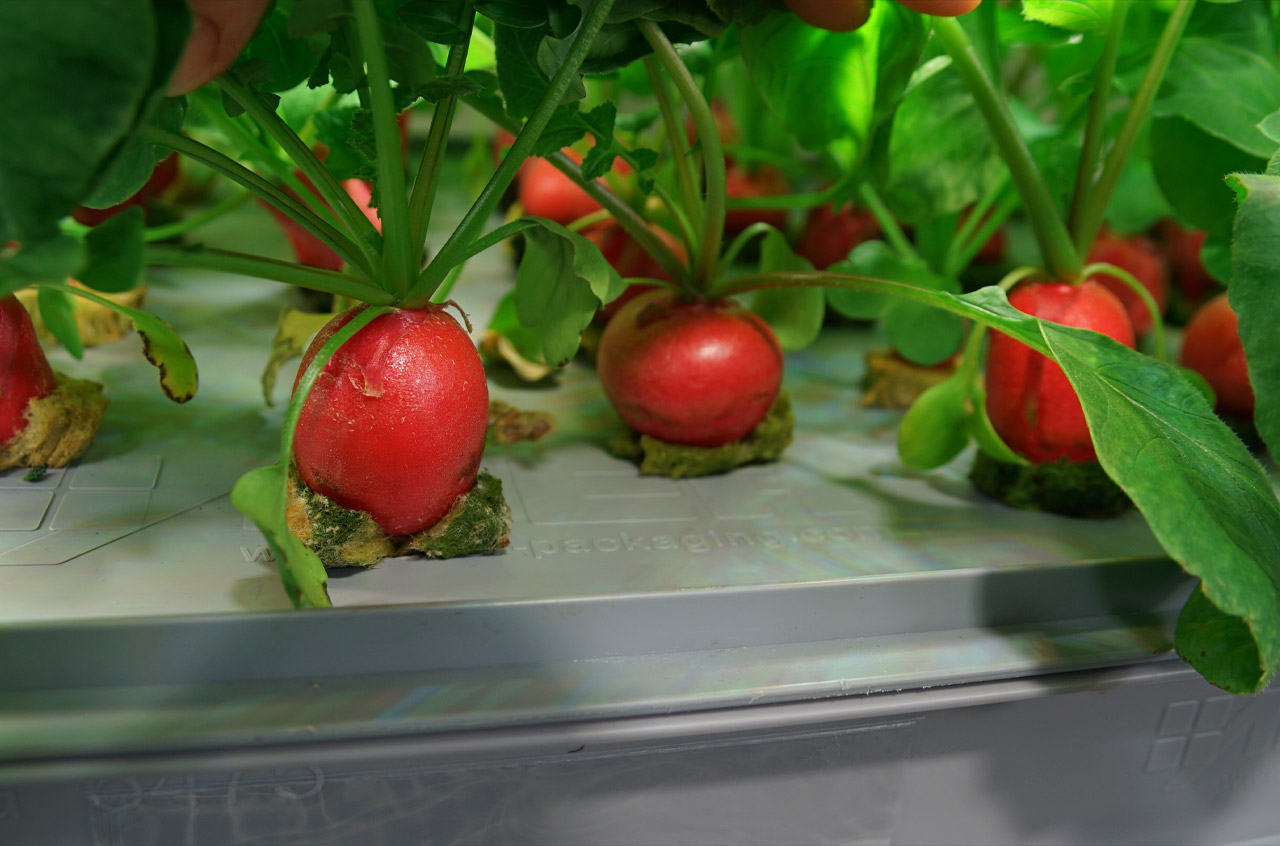
Was braucht es noch für ein zünftige Brotzeit? Radieschen gibt es dafür schon einmal im Ewigen Eis. Foto: DLR
In the container and on social media: "Big Brother" for vegetables
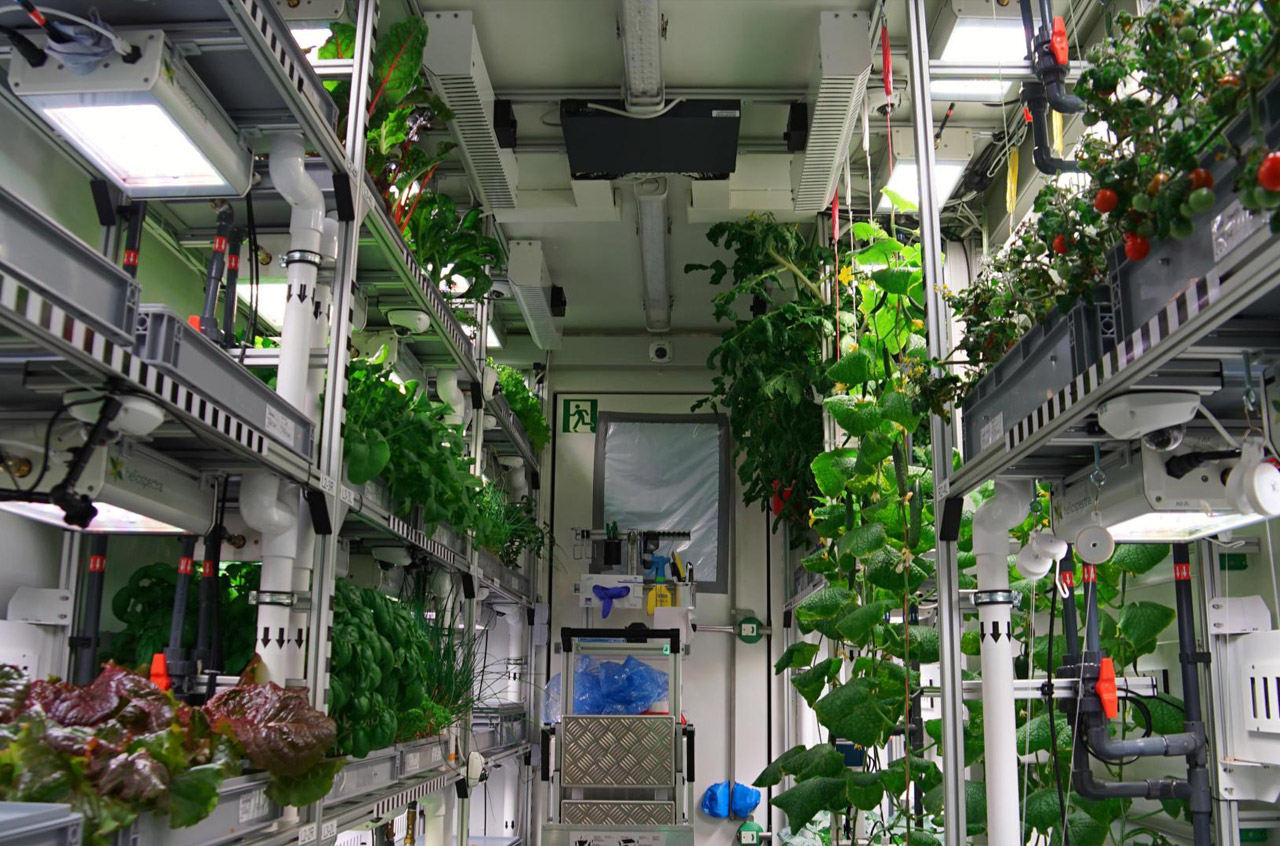
Alles was das vegane Herz begehrt, wächst nun auch hier. Nur den Notausgang möchte man bei den draußen herrschenden Niedrigtemperaturen nur ungern benützen. Foto: DLR/NASA/Bunchek
The greenhouse is equipped with a newly developed nutrient delivery system and LED lighting. There is also a bio-detection and decontamination system, as well as food quality and safety procedures. So researchers here are testing a reliable plant-growing system with maximum biomass output that requires no soil at all. This is achieved with optimized light, the wavelength of which is adjusted according to the growth stage of the plants. An adjusted CO2 level and a closed water circuit complement the greenhouse. By controlling the environmental conditions in the greenhouse, the development of the plants can be influenced so that they have a particularly high nutrient content. However, the researchers are not yet obtaining fresh seedlings from the existing plants. Likewise, EDEN ISS is still dependent on Neumayer Station. That's where the water and energy come from.
EDEN ISS is well networked. On social media, activities at the EDEN ISS Antarctic greenhouse can be followed using the hashtag #MadeInAntarctica. The Antarctic greenhouse has channels on Facebook and Instagram, as well as an image gallery on flickr. On the Internet, a tool can be used to observe the plants of the EDEN-ISS greenhouse in Antarctica. Every day, images from 34 cameras provide a glimpse of how the plants are growing.