
A laser on the moon
 he year is 2029. At the edge of a crater that has not seen a ray of sunlight for billions of years, a rover positions its delicate cargo. The cylindrical container looks unremarkable, yet it holds one of the most precise scientific instruments ever to be installed on the Moon. That, at least, is the goal of an international team of researchers from the United States and Germany: to build the most stable laser ever created in one of the coldest, darkest places in the solar system. One day, it could help navigate spacecraft on the Moon or enable extremely precise timekeeping.
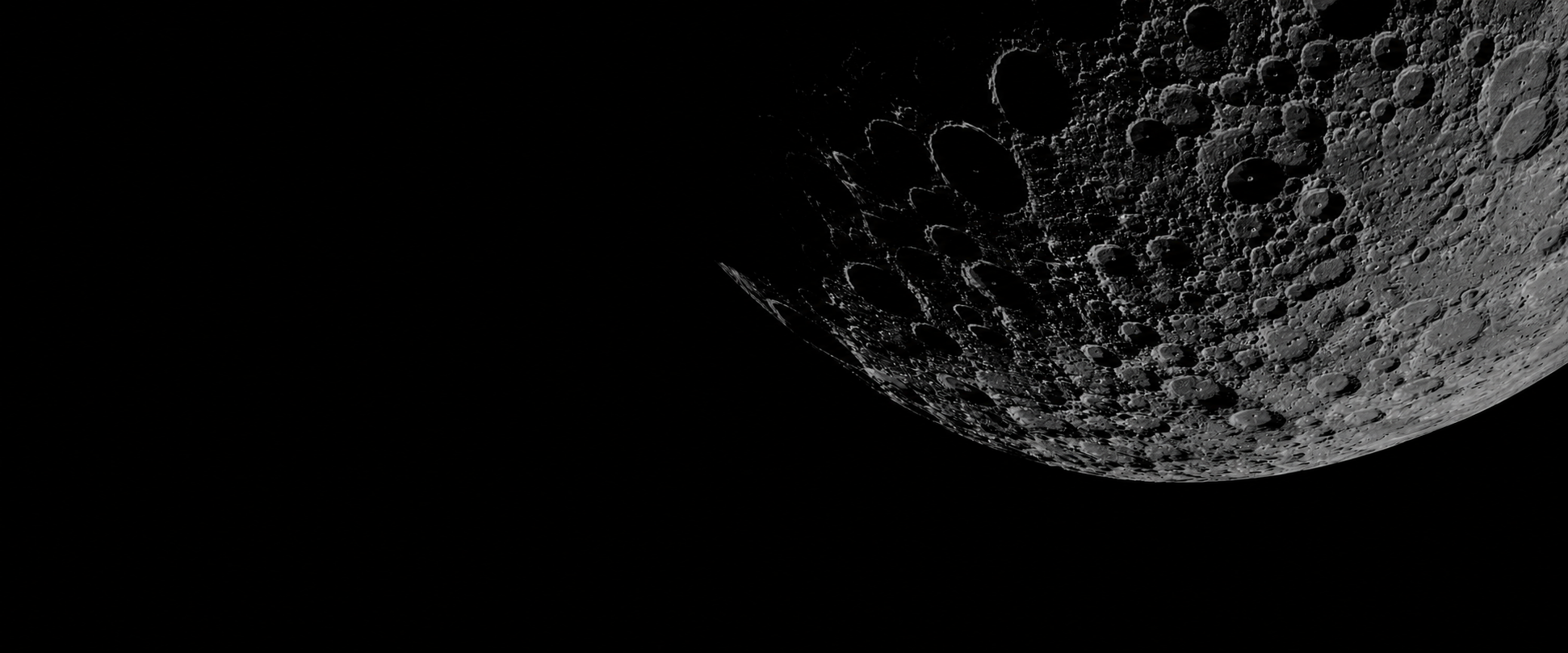
They are places of eternal night: Near the Moon’s south pole lie craters shrouded in permanent darkness, untouched by sunlight. They are bitterly cold, airless, and nothing moves. Harsh and forbidding as they may seem, these conditions could make them the perfect place to build an ultra-stable laser.
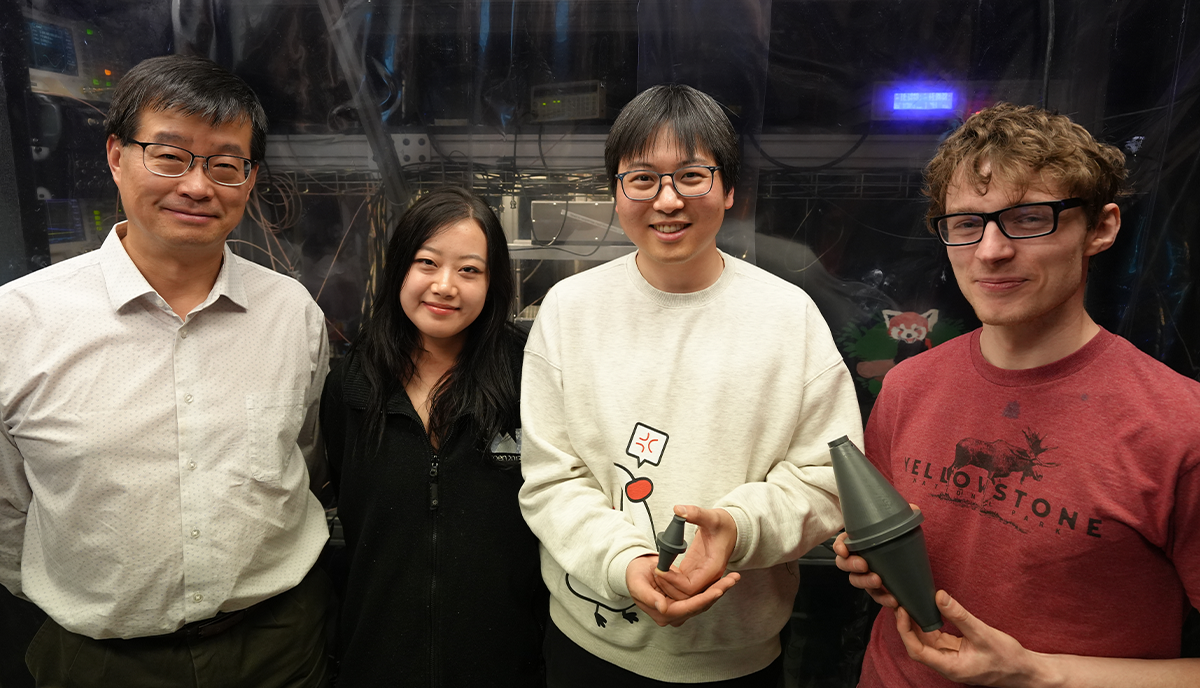
Physicist Prof. Jun Ye (left) proposes installing an ultra-stable laser on the Moon. Central to this is a silicon laser component, an optical resonator. Members of his team hold replicas of this optical resonator (from left to right: Zoey Hu, Dahyeon Lee, and Ben Lewis). Photo Credit: R. Jacobson/NIST
That, at least, is the proposal of a research team led by physicist Professor Jun Ye of JILA, NIST and University of Colorado in the United States. Together with colleagues from the Jet Propulsion Laboratory, Germany’s Physikalisch-Technische Bundesanstalt (PTB), and the company Lunetronic Inc., the researchers have published the proposal in the journal PNAS.
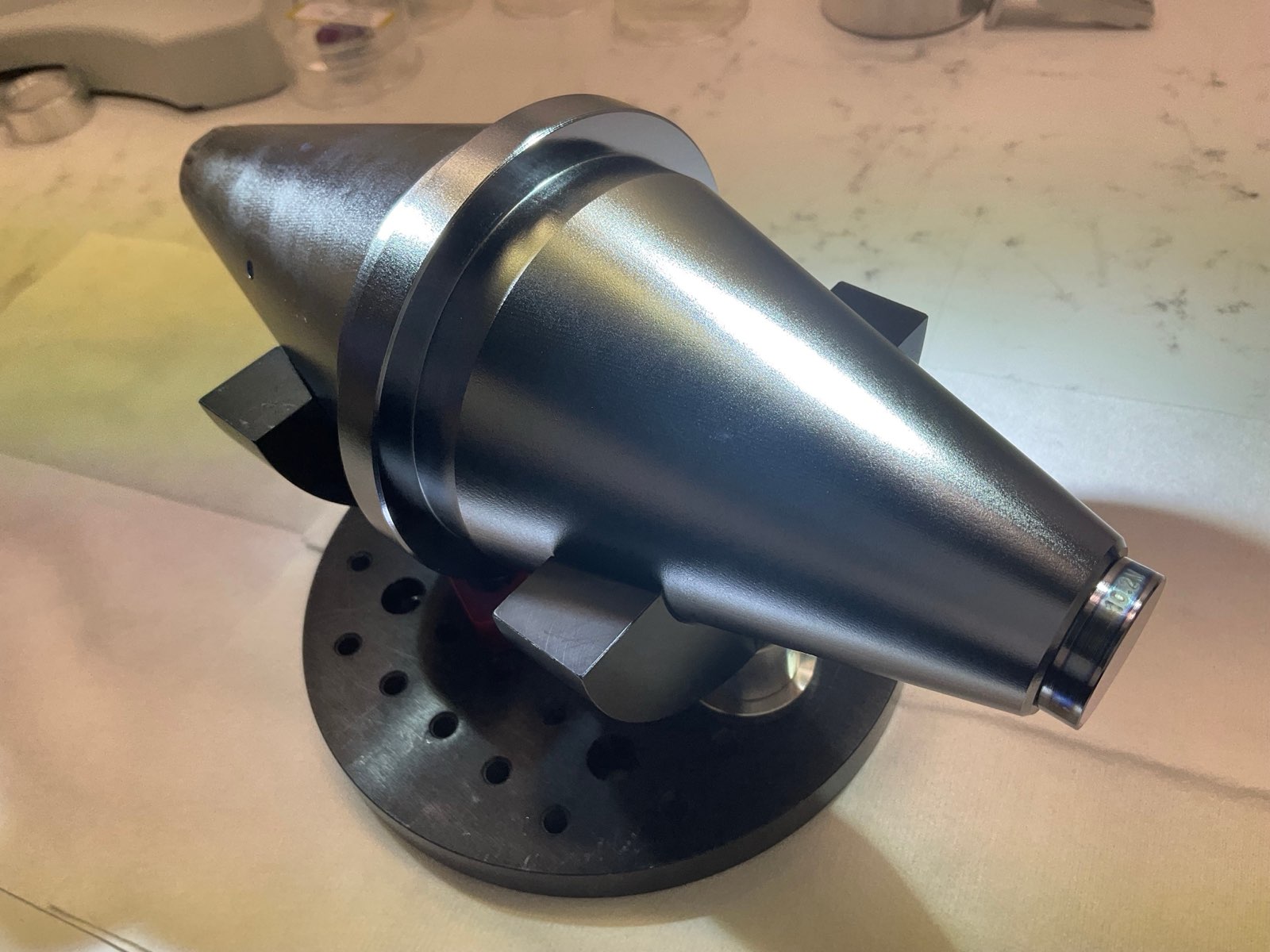
The silicon optical resonator in the lab. Photo Credit:Ye Labs/JILA, NIST & Univ Colorado
At the heart of the plan is a special stable laser component known as a silicon optical resonator, designed to keep a laser’s frequency, or color, as constant as possible. Inside a block of silicon, laser light is reflected back and forth between two mirrors, and only certain frequencies are allowed to exist depending on the distance between them. The more stable the distance between the mirrors, the steadier the laser frequency. Building a highly stable laser therefore requires consistently stable thermal environment and as little mechanical movement as possible.
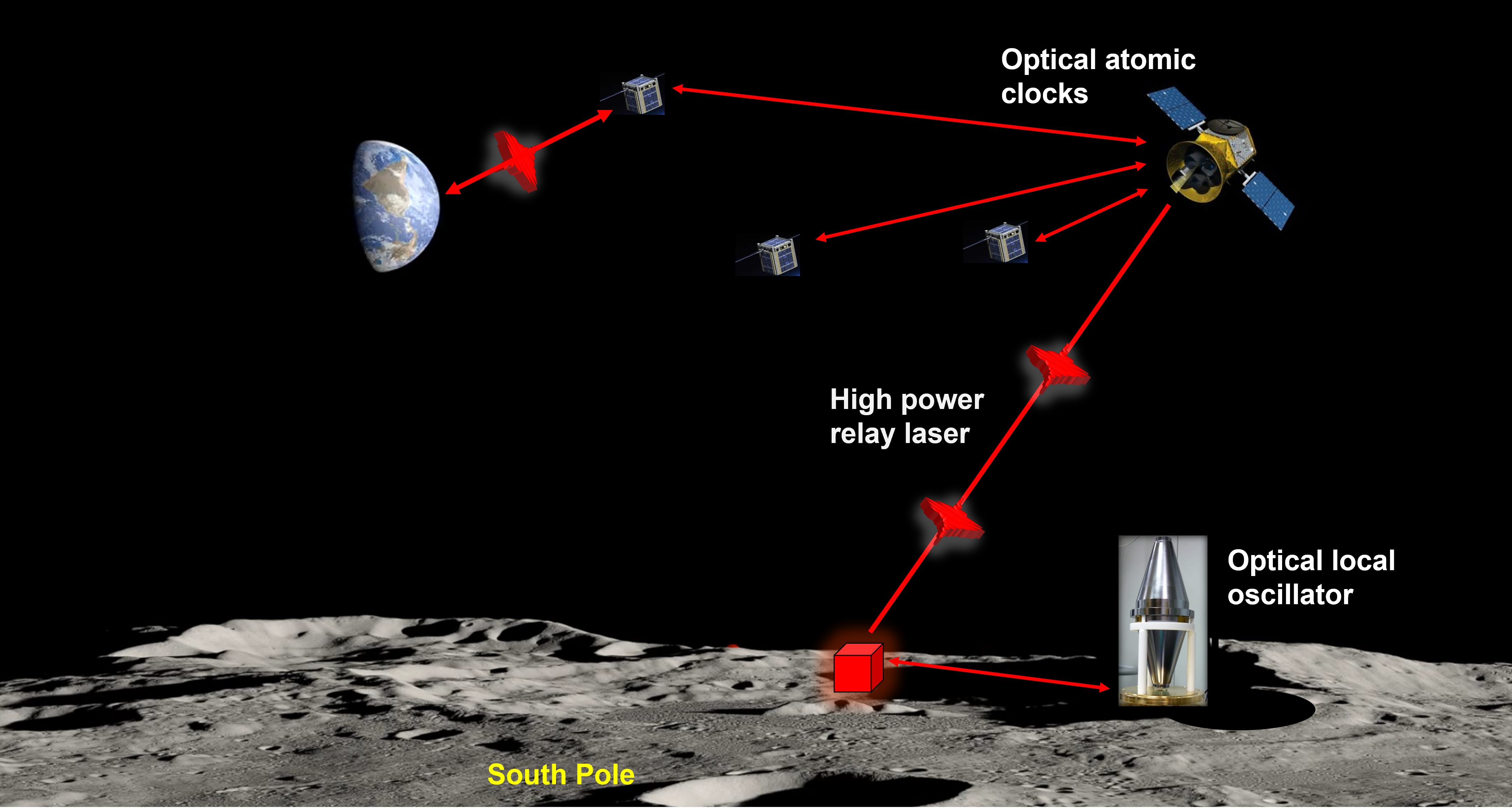
An ultra-stable laser on the moon could, for example, be used to build extremely precise clocks whose timing is determined by electron transitions in atoms. Image Credit: J. Ye/NIST with lunar background image produced by NASA’s Visualization Studio
On Earth, achieving those conditions takes a lot of efforts, as Ye knows from experience. For years, his team has worked with colleagues at PTB to develop silicon-resonator-based laser systems that rank among the most stable in the world. But maintaining the right environment requires an array of equipment: cryostats to cool the resonator, a vacuum pump to remove air and maintain the vacuum, and a vibration isolation platform. “All of these conditions can be satisfied in a passive manner in the permanently shadowed regions on the moon, without using any active machinery,” Ye explains.
These permanently shadowed regions exist because the Moon’s axis – unlike Earth’s – is oriented almost perpendicular to the direction from which sunlight arrives. For the researchers, this offers several advantages.
While temperatures at the Moon’s equator can rise over the course of a day from about -130°C at night to more than 120°C during the day, they remain relatively constant in the permanently shadowed craters near the poles at around -220°C – about 50 degrees above absolute zero. According to the researchers, the silicon resonator could be cooled even further, to 16 degrees above absolute zero, by releasing heat in the form of infrared radiation to the deep universe. At that temperature, silicon exhibits a special thermal property - it neither expands nor contracts in response to slight temperature fluctuations.
The craters also offer an exceptionally high vacuum and almost no vibration. For both, the lunar surface already offers much better conditions than Earth: the Moon has no atmosphere, which means there are comparatively few gas particles, and the Moon’s tectonic activity – its natural surface movement – is very slight. In the dark craters, the conditions are even more extreme, since they are exposed neither to direct sunlight nor to bombardment – for example by solar wind – that could dislodge particles from the surface or trigger vibrations.
“This combination of high vacuum, low seismic noise, good thermal stability, and easy access to vast amount of cooling made me realize it is an ideal physical environment to house an ultrastable optical resonator made of silicon,” says Ye. The researchers have calculated that under these conditions, performance could be ten times better than that of the best current systems on Earth.
The laser system would require more than just the silicon resonator, however. It also needs the laser itself, and unlike the resonator, that part requires power. The team therefore proposes placing the laser at the rim of the crater, where – thanks to the Moon’s lack of atmosphere – it could receive continuous sunlight and run on solar energy.
Such an ultra-stable laser could provide the basis for a navigation system operating on the Moon, enabling spacecraft to determine their position precisely – comparable to GPS on Earth. At the same time, it would allow highly accurate distance measurements between satellites – and pave the way for the first optical atomic clock on an extraterrestrial celestial body. Atomic clocks are currently considered the most precise timekeepers, with their ticking determined by electron transitions in atoms.
The biggest challenge, Ye says, would be installing the system on the Moon in the first place: “I am not a space scientist or engineer, but I know it's challenging to have a manned mission to the moon, and we will likely need to have astronauts set up such an extended optical system.”
In fact, the researchers have already received many interesting inquiries. Ye is optimistic: “Our hope is to convince either a government agency or a private company to take up this idea. We believe this is a very compelling scientific idea that can have major impact to space programs in the future.” As a first step, the researchers would like to place a silicon resonator on a near-Earth satellite to carry out initial tests there.
Original publication:
J. Ye et al.
Lunar silicon cavity
Proc. Natl. Acad. Sci. U.S.A. 123 (19) e2604438123
doi.org/10.1073/pnas.2604438123

Welcome to Photonworld – a platform for knowledge, interesting facts and science on the topic of light. Photonworld aims to provide a basic understanding of the physics of light and its countless phenomena. From medicine, to art and physics: all topics are covered.
Photonworld originated as an initiative of the excellence cluster the Munich-Centre for Advanced Photonics (MAP) and the Laboratory for Attosecond Physics (LAP) at the Max Planck Institute of Quantum Optics (MPQ).


The initiator of the project is Prof. Dr. Ferenc Krausz, Chair of Experimental Physics at the LMU and Director of the MPQ.
Photonworld’s Student Zone reports directly out of the PhotonLab, which is supported by the Munich Center for Quantum Science and Technology (MCQST) and the DFG Research Unit FOR 2783. At the PhotonLab, schoolteachers and students can find up-to-date information about experiments and goings-on at the lab, and plan their own visit to the laboratory.